
Severe weather in Washington, whether it’s snowstorms, wind events, or heavy rainfall, can disrupt business operations with little warning. Even well-prepared businesses may face temporary closures and unexpected income loss.
A common question we hear is:
“If my business closes due to bad weather, will my insurance cover the lost income?”
The answer depends on what caused the closure and how your policy is written.
When Coverage May Apply: Physical Damage at Your Location
If severe weather causes direct physical damage to your insured property, Business Income coverage may apply.
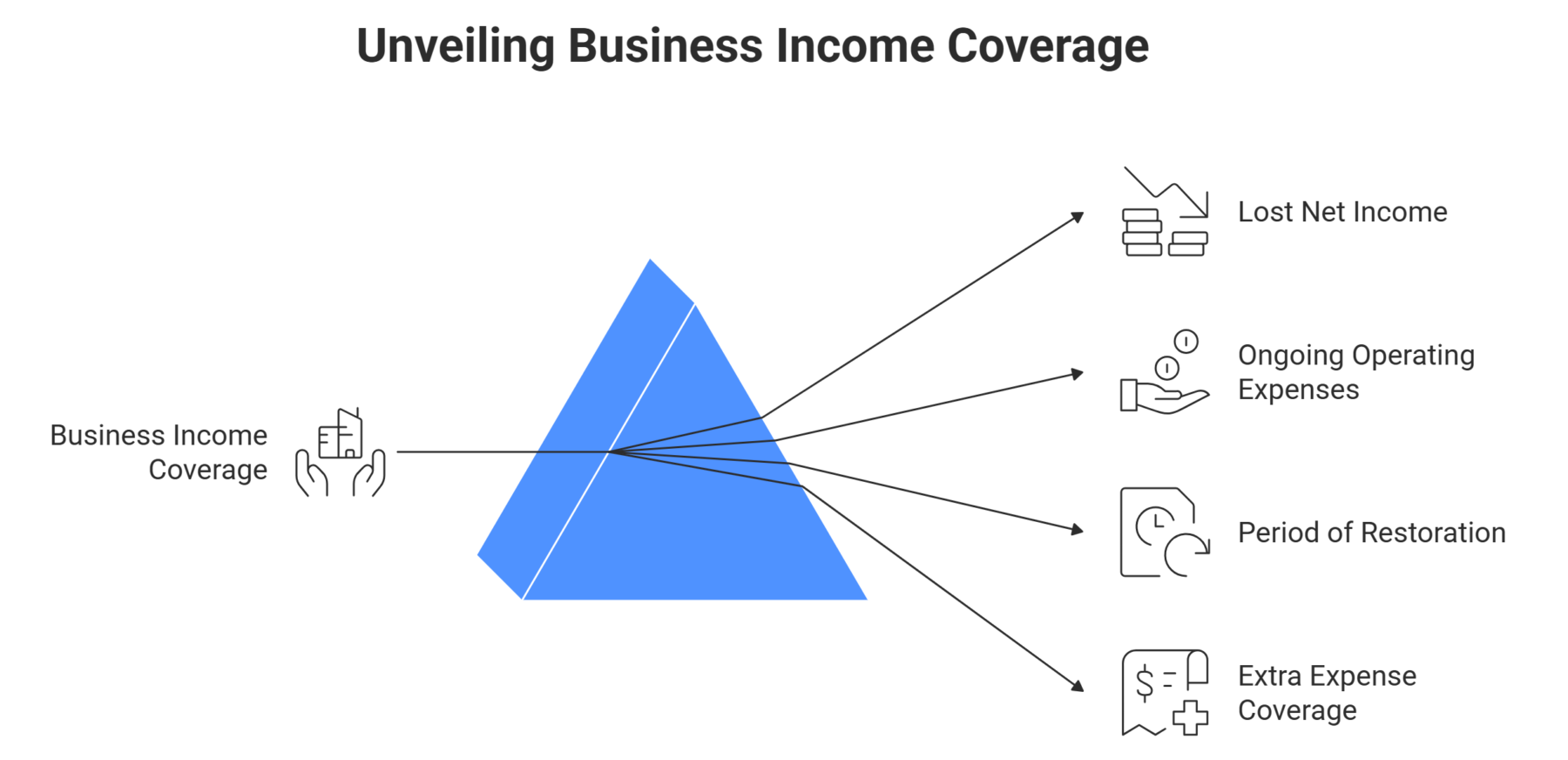
Business Income (also called Business Interruption) is designed to help replace:
- Lost net income (profit)
- Ongoing operating expenses like payroll, rent, and utilities
This coverage applies during the “period of restoration”—the time it takes to repair or replace the damaged property.
Many policies also include Extra Expense coverage, which can help pay for costs that reduce downtime, such as:
- Temporarily relocating your business
- Renting equipment
- Expediting repairs
Example
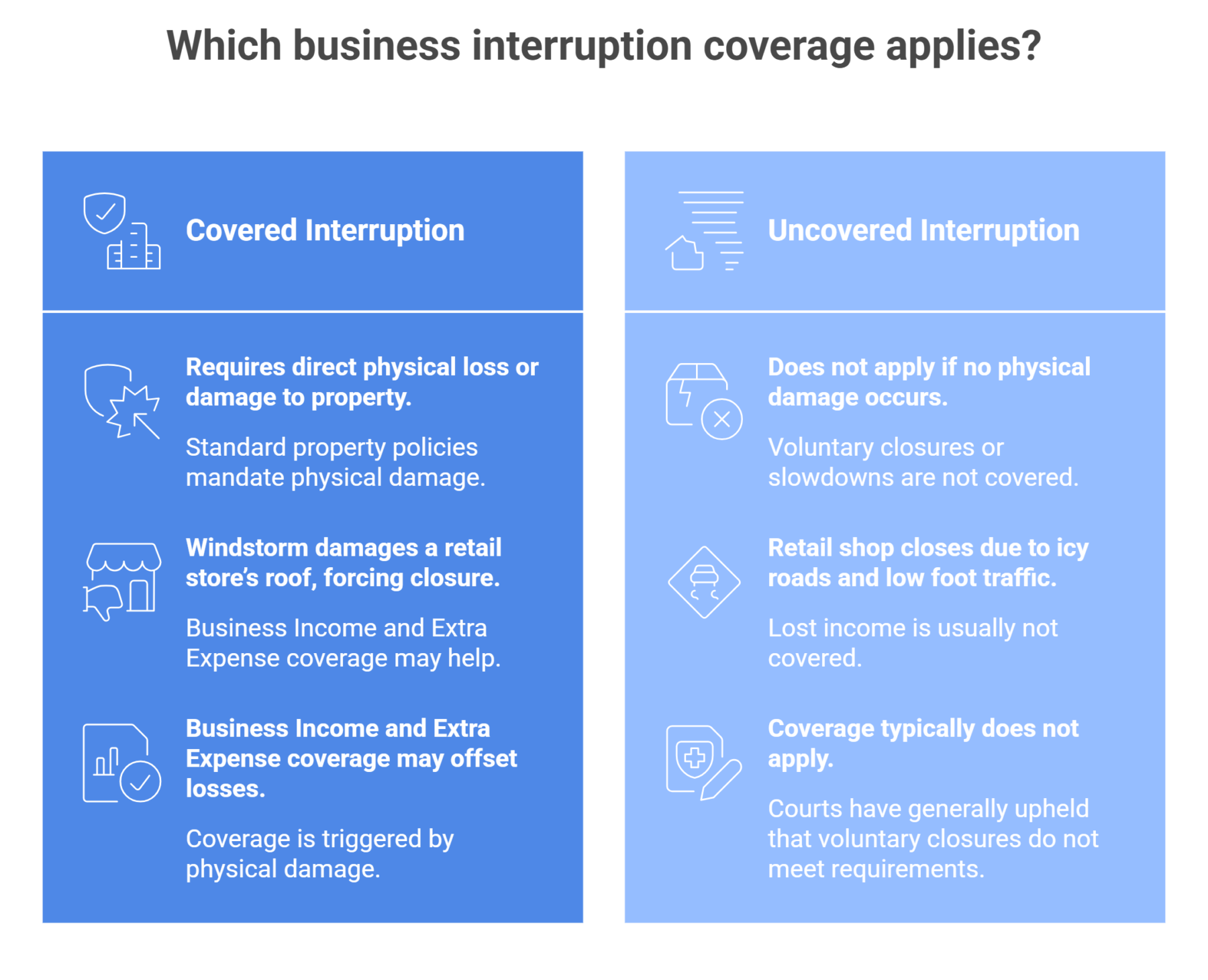
A windstorm damages a retail store’s roof, forcing a 5-day closure.
If the business averages $8,000/day in revenue with 40% operating expenses, the net income loss could exceed $24,000, plus ongoing fixed costs like payroll and rent.
After the waiting period in the policy, Business Income and Extra Expense coverage may help offset these losses.
When Coverage Typically Does NOT Apply: No Physical Damage
If your business closes due to:
- Hazardous road conditions
- Employee safety concerns
- Reduced customer traffic
—but no physical damage occurs at your property, coverage typically does not apply.
Most standard property policies require direct physical loss or damage to trigger Business Income coverage. Courts have generally upheld that voluntary closures or weather-related slowdowns alone do not meet this requirement.
Example
A retail shop closes for two days due to icy roads and low foot traffic.
Because there is no property damage, the lost income is usually not covered.
Civil Authority Coverage: A Limited Exception
In some situations, Civil Authority coverage may apply.
This coverage can provide limited income protection when:
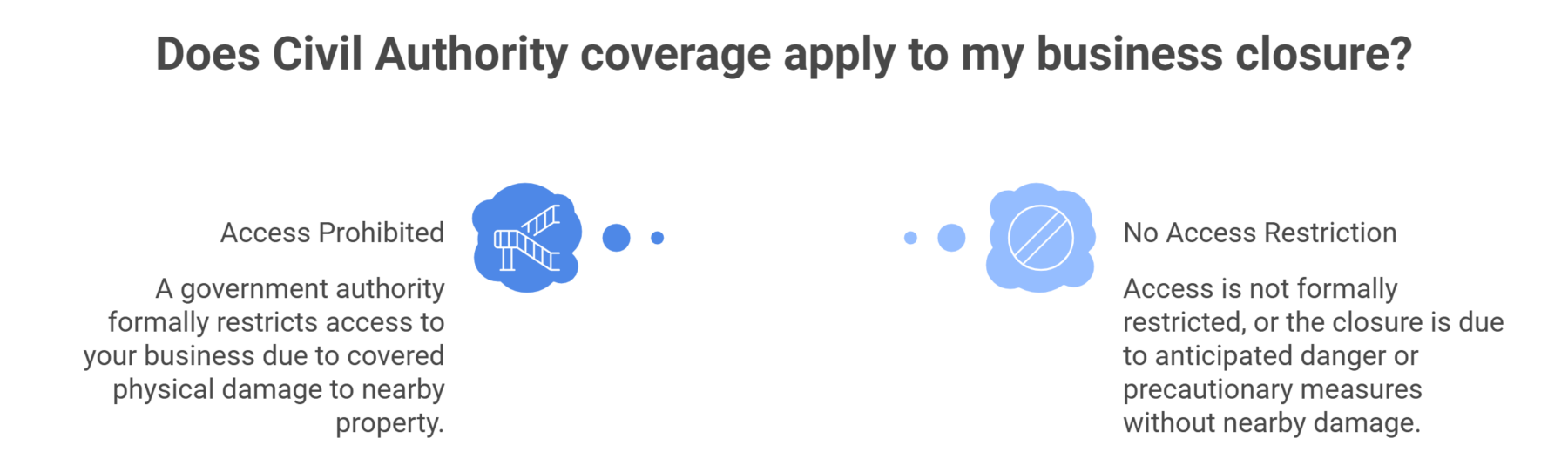
- A government authority prohibits access to your business
- The order is due to covered physical damage to nearby property
Typical Conditions
- Access must be formally restricted (not just advised)
- Damage must occur to other property nearby
- A waiting period often applies (commonly ~72 hours)
- Coverage lasts for a limited number of days
Example
A nearby building is damaged during a storm, and the city blocks access to your street for safety.
Even if your business is undamaged, Civil Authority coverage may apply temporarily.
However, anticipated danger or precautionary closures without nearby damage generally do not qualify.
Important Coverage Gaps Many Businesses Miss
Many business owners assume any closure is covered—but gaps are common without the right endorsements.
Ingress/Egress Coverage
May apply if roads are blocked and customers or employees cannot access your business—even if your property isn’t damaged.
Not included in all policies.
Contingent Business Interruption
Covers income loss if a supplier or key partner is impacted by a covered event.
Example: Your supplier shuts down due to flooding, and you can’t operate.
Extended Business Income
Provides coverage after reopening, while your business recovers back to normal revenue levels.
Flood Damage: A Critical Exclusion
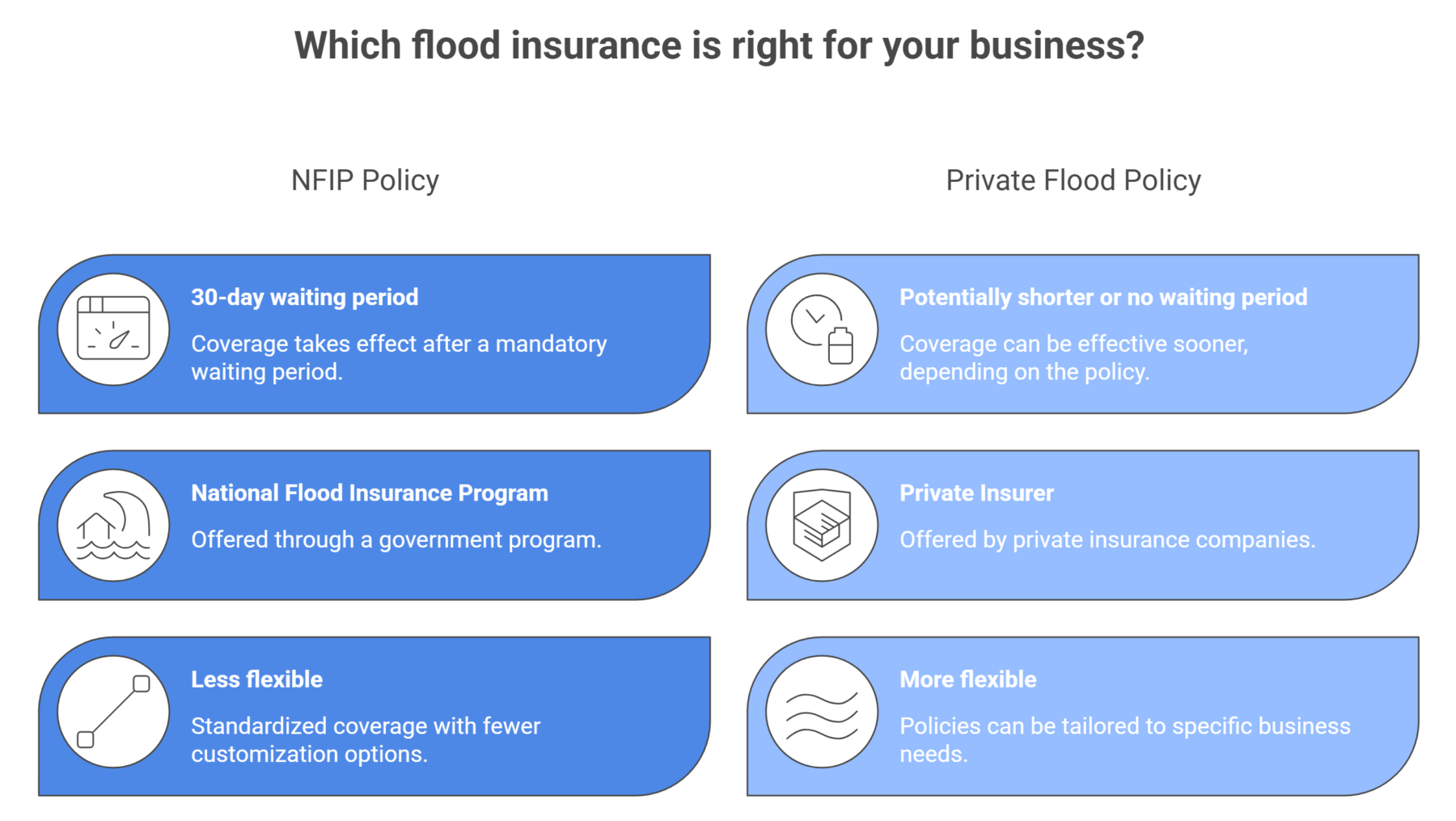
Standard commercial property policies typically exclude flood damage.
To be covered, businesses usually need:
- A separate flood policy through the National Flood Insurance Program (NFIP) or
- A private flood insurance policy
⚠️ Important:
NFIP policies generally have a 30-day waiting period before coverage takes effect. Waiting until a storm is imminent may leave your business uninsured.
Quick Assessment: Would Your Closure Be Covered?
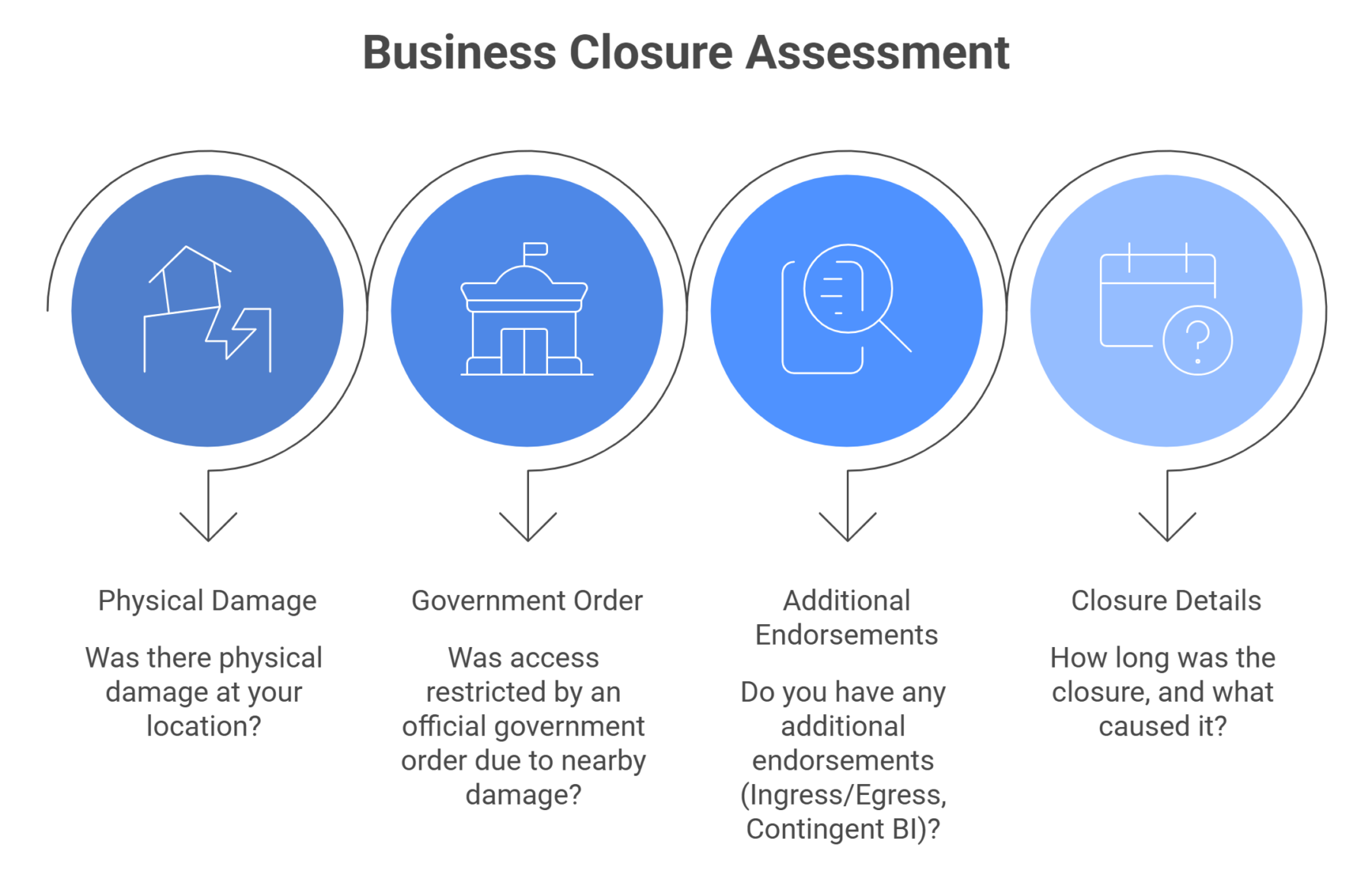
If your business experiences a weather-related shutdown, ask:
- Was there physical damage at your location?
- Was access restricted by an official government order due to nearby damage?
- Do you have any additional endorsements (Ingress/Egress, Contingent BI)?
- How long was the closure, and what caused it?
These factors help determine whether coverage may apply.
What Business Owners Should Do Now
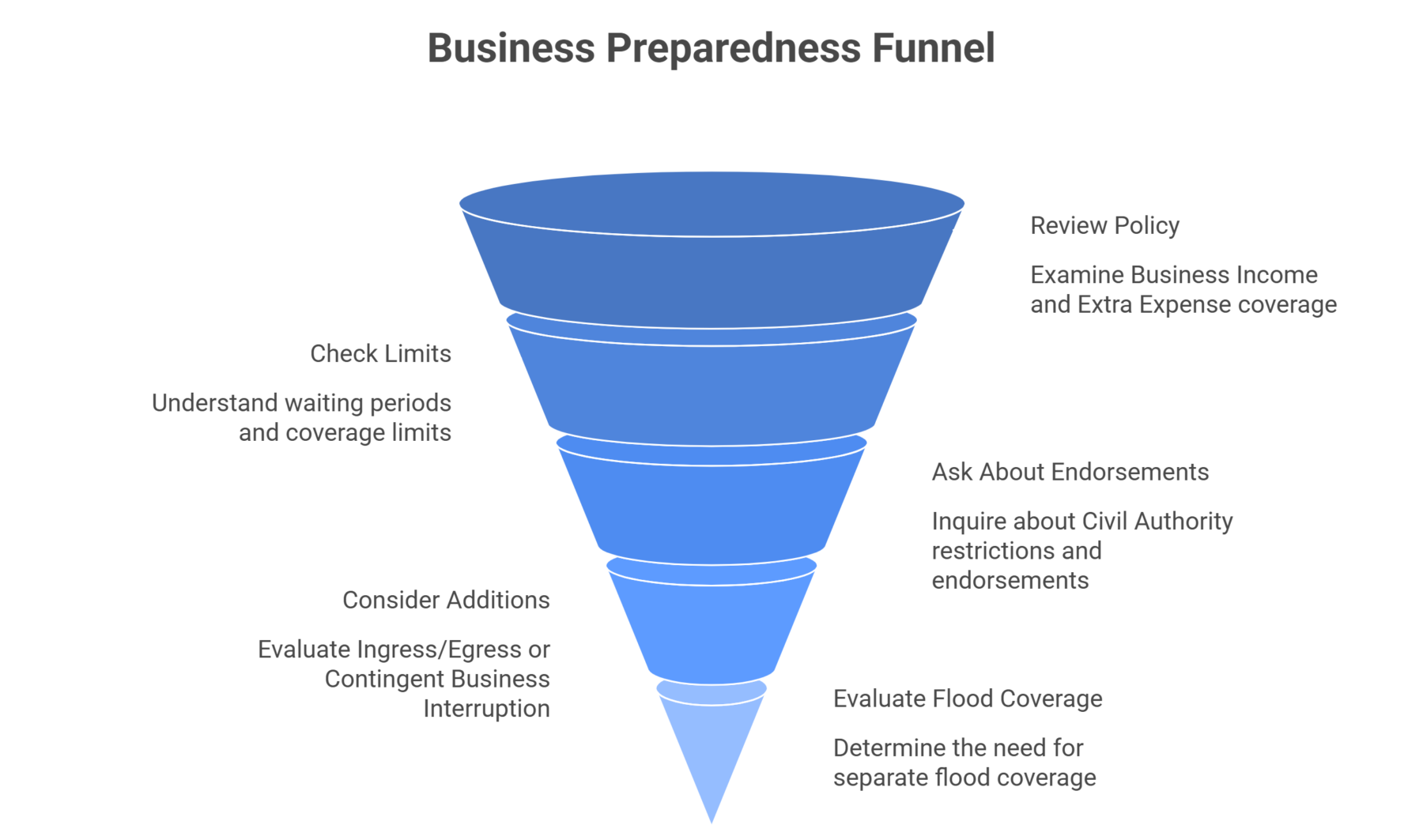
Before the next storm hits, consider taking these steps:
- Review your policy for Business Income and Extra Expense coverage
- Check for waiting periods and coverage limits
- Ask about Civil Authority restrictions and endorsements
- Consider adding Ingress/Egress or Contingent Business Interruption
- Evaluate whether you need separate flood coverage
- Request a coverage review to identify potential gaps
Frequently Asked Questions
Does insurance cover business closure due to snow?
Only if the snow causes direct physical damage or triggers a qualifying coverage like Civil Authority.
What is the waiting period for Business Income coverage?
Many policies include a waiting period (often 48–72 hours) before coverage begins.
Does Civil Authority cover power outages?
Not usually—unless the outage is tied to covered physical damage and an official order restricting access.
Is flood damage covered under business insurance?
No—flood typically requires a separate policy.
Learn More From the PNW Team on YouTube
We know business insurance can feel like a different language, so the PNW Team breaks it down into plain English.
On our channel, we chat about real-life Washington scenarios—like what happens to a local shop when the power goes out or how a winter windstorm might affect your bottom line. Our goal is to help you feel more confident about your coverage without the boring “insurance-speak.”
Check us out and subscribe here: PNW Insurance Group on YouTube
The Bottom Line
- With physical damage: Business Income and Extra Expense may apply
- Without damage: Closures are generally not covered
- With a government order: Civil Authority may provide limited coverage
- For flooding: Separate flood insurance is usually required
Every policy is different, and coverage depends on your specific forms and endorsements.
Get a Free Coverage Review
Not sure if your business would be covered during a weather-related shutdown?
We offer a business income coverage review to help identify gaps and ensure your protection aligns with real-world risks before the next storm hits.
Compliance Note
Educational Disclaimer
Think of this article as a helpful roadmap, not a legal contract or a promise that a specific claim will be paid. Every insurance policy is as unique as a Washington rainstorm—some are light, some are heavy, and they all have different rules (and fine print).
Whether your business is covered for a closure depends on your specific policy language, your endorsements, and the unique facts of what happened. Because insurance rules and Washington state requirements can change, we always recommend reviewing your actual policy documents. The best way to know exactly where you stand is to have a one-on-one conversation with a licensed insurance professional who can look at your specific situation.
Weather-related reporting thresholds, local laws, and insurance forms can evolve. Always check with the Washington Office of the Insurance Commissioner or your provider for the most current info.