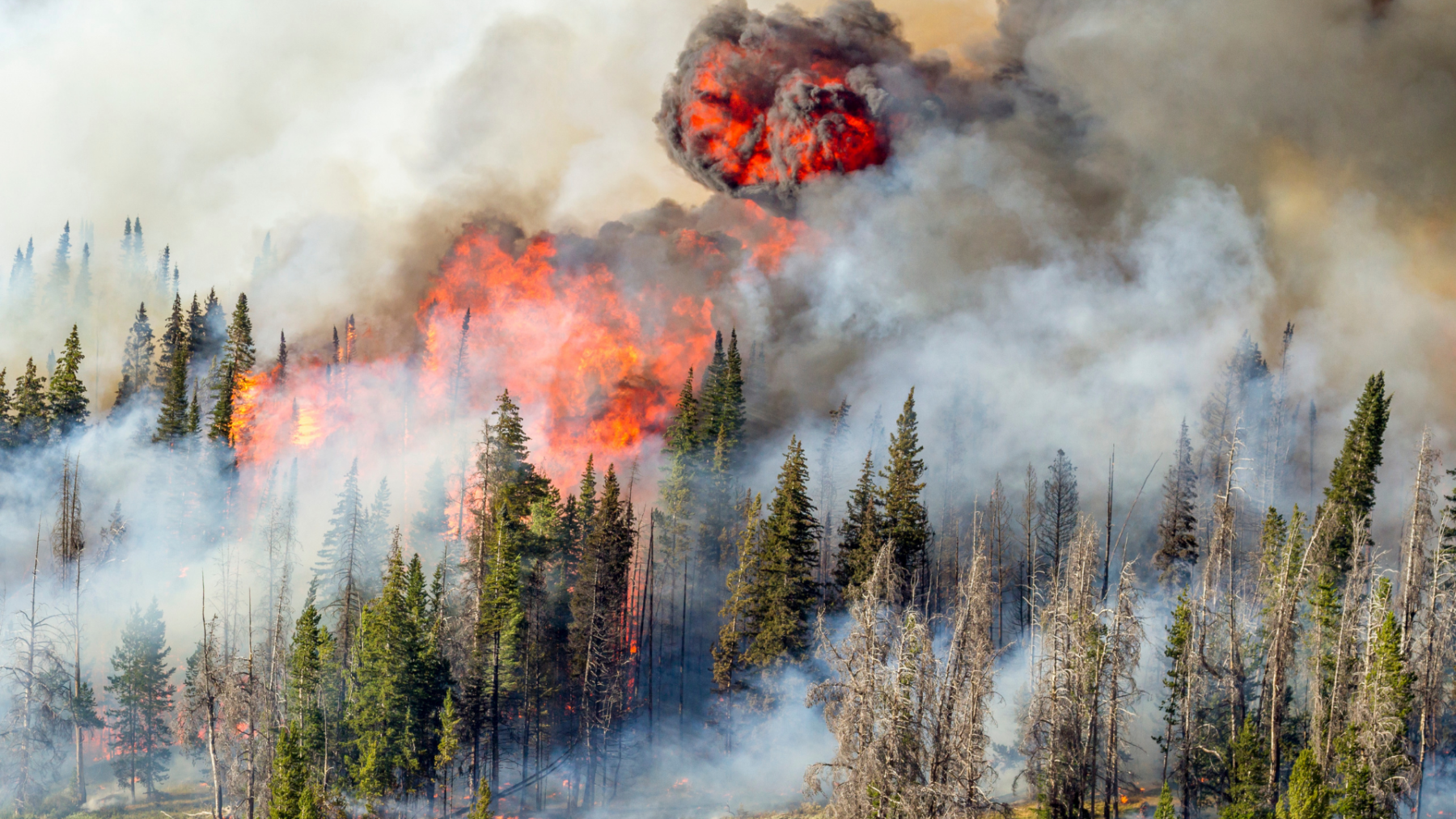
Being prepared for wildfire risk isn’t just something to think about during awareness campaigns, it’s a year-round responsibility for many homeowners. While wildfires have long been associated with remote forested regions, recent years have demonstrated how quickly their effects can reach residential communities, making ongoing preparedness an important part of protecting your home and family.
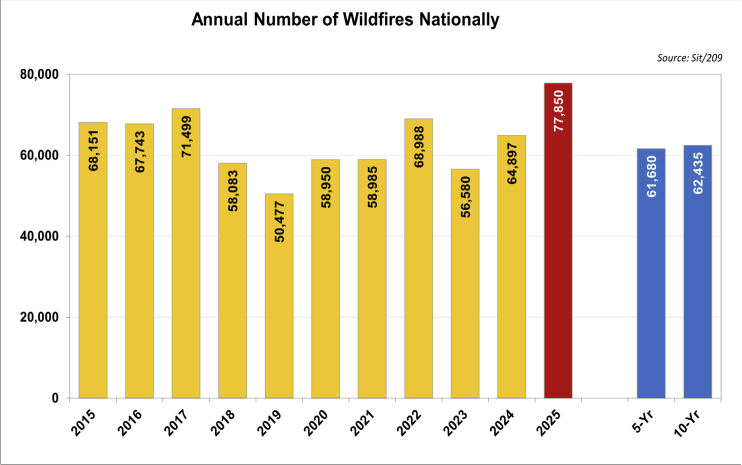
Source: Screenshot from the National Interagency Coordination Center, Wildland Fire Summary and Statistics Annual Report 2025, p. 10.
According to the National Interagency Coordination Center Wildland Fire Summary and Statistics Annual Report (2025), the United States experienced roughly 77,850 wildfires in 2025, up from about 67,900 in 2024. These fires burned more than 5.1 million acres nationwide, a decrease from the nearly 8.9 million acres reported the previous year. While overall acreage burned was lower, the number of wildfire incidents in 2025 was above both the five-year and ten-year averages.
Wildfires also caused notable property damage. That year, reports indicated over 18,000 structures were destroyed, including thousands of residential homes, minor structures, and commercial buildings. The Southern California geographic area experienced the highest number of losses.
Closer to home, wildfire activity in the Pacific Northwest remained significant:
- Washington: roughly 1,870 wildfires burning about 247,000 acres
- Oregon: approximately 2,750 wildfires burning around 325,000 acres, including one of the 40 largest fires in 2025 (~95,700 acres), reported as human-caused
- Idaho: about 1,300 wildfires burning nearly 181,000 acres
These numbers highlight an important reality: wildfire risk is not limited to rural forests anymore. For homeowners across the Pacific Northwest, preparation and understanding potential exposures are becoming an essential part of protecting both property and finances.
Why Pacific Northwest Homeowners Should Pay Attention
Wildfire risk in the Pacific Northwest may no longer be limited to remote forests. In many areas, changing weather patterns, dry conditions, and wind-driven fires have the potential to bring wildfire impacts closer to residential communities. In some situations, a wildfire miles away could still affect nearby homes through embers, smoke, intense radiant heat, or even increased risk of post-fire flooding and mudflow.
Because of this, some homeowners are beginning to view wildfire risk less as a distant forest issue and more as something worth considering when preparing their property and reviewing their insurance coverage.
How Wildfires Can Affect Homes Miles Away
Understanding how wildfire damage occurs can help homeowners better prepare and protect their property. In many cases, homes may be affected even when the main fire line is far away.
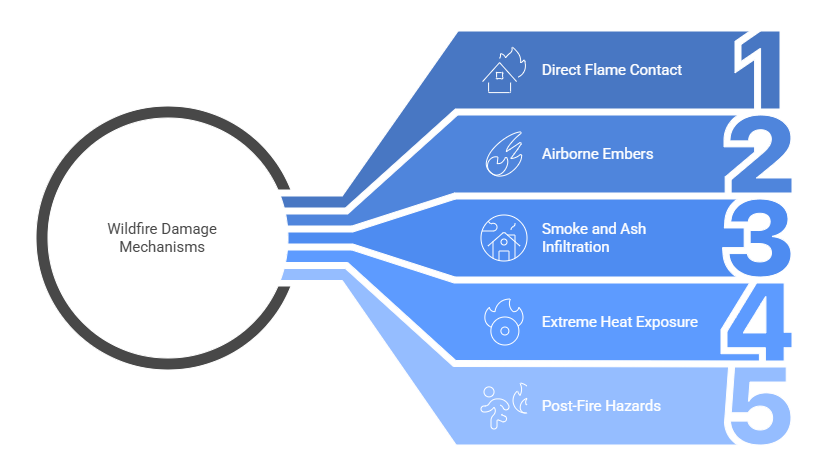
- Direct flame contact
Flames can ignite siding, decks, fences, and nearby structures when a wildfire reaches residential areas. - Airborne embers
Small burning embers are one of the most common causes of home ignition during wildfires. Wind can carry embers ahead of the main fire, sometimes traveling significant distances and landing on rooflines, vents, decks, or dry vegetation near a home. - Smoke and ash infiltration
Even if flames never reach a property, smoke and ash may still enter homes through vents or openings, affecting indoor air quality and settling on walls, furnishings, and HVAC systems. Cleanup and remediation can sometimes be extensive depending on the level of exposure. - Extreme heat exposure
Radiant heat from nearby fires can crack windows, warp siding, or damage building materials without direct flame contact. - Post-fire hazards
After vegetation burns away, soil stability can be reduced. In some areas, heavy rainfall following a wildfire may increase the risk of erosion, flash flooding, or mudflow.
Preparation tip: Two wildfire-related risks that can sometimes catch homeowners off guard are ember-driven ignition and post-fire mudflow. Before fire season begins, it may be helpful to inspect vents, attic openings, and other potential ember entry points, and to understand whether your property could be affected by post-fire flooding or mudflow in the surrounding area.
Insurance Coverage: What Homeowners Should Review
Wildfire preparedness isn’t only about protecting the physical structure of your home. It also includes understanding how your insurance coverage works before a loss occurs. Policies can vary significantly, so reviewing key coverage sections ahead of wildfire season may help avoid surprises later.
Below are several areas homeowners may want to review with their insurance professional.
Dwelling Coverage (HO-3)
Confirm whether your home is insured for Replacement Cost (RC) rather than Actual Cash Value (ACV). Replacement cost coverage generally pays to rebuild the home with similar materials at current prices, while ACV factors in depreciation. If a home is insured on an ACV basis, rebuilding costs after a major loss could exceed what the policy pays.
Extended or Guaranteed Replacement Cost
Some policies offer endorsements such as Extended Replacement Cost or Guaranteed Replacement Cost, which may allow coverage above the dwelling limit if rebuilding costs rise after a disaster. These endorsements typically provide additional coverage above the base dwelling limit, depending on the insurer and policy terms.
Ordinance or Law (Increased Cost of Construction)
If a home must be rebuilt to meet updated building codes after a wildfire, Ordinance or Law coverage may help pay the additional costs. Many policies include this coverage as a percentage of the dwelling limit, which may or may not be sufficient depending on the home and local building requirements.
Loss of Use / Additional Living Expenses (ALE)
If your home becomes temporarily uninhabitable after a wildfire, Additional Living Expense (ALE) coverage may help pay for temporary housing and related living costs while repairs or rebuilding take place. Because housing demand can increase after disasters, reviewing both the monthly and total limits on this coverage may be helpful.
Debris Removal
Cleanup after a wildfire can involve removing ash, damaged structures, and burned trees. Policies often include specific limits for debris removal, and some also have per-tree removal limits. In severe cases, debris cleanup can become a significant part of overall recovery costs.
Scheduled Personal Property
Standard homeowners policies typically include coverage limits for categories like jewelry, art, collectibles, and certain electronics. Scheduling high-value items individually may provide broader coverage and higher limits than standard blanket coverage.
Smoke Damage and Contents Cleaning
Smoke and ash contamination may require professional cleaning or restoration of belongings. It may be helpful to confirm whether your policy covers contents cleaning for smoke damage at replacement cost or whether sublimits or depreciation could apply.
Evacuation or Civil Authority Coverage
Some policies provide limited reimbursement if homeowners must evacuate due to a wildfire or a government-issued evacuation order. Coverage terms, triggers, and limits can vary, so reviewing how evacuation expenses for both people and pets may be handled can be worthwhile.
Loss Assessment (for HOA or Condo Owners)
For homeowners in communities with a homeowners association, loss assessment coverage may help cover your share of certain costs if the association’s master policy does not fully cover a loss affecting shared property.
Flood or Mudflow Exposure
Standard homeowners policies generally do not cover flood damage, which may include certain mudflow events that can occur after a wildfire. Homeowners in higher-risk areas may want to discuss separate flood coverage options through programs such as the National Flood Insurance Program or private insurers. NFIP policies typically have a 30-day waiting period before coverage begins, so planning ahead is important.
Pro tip: When reviewing your coverage, consider asking for the actual policy pages and endorsement numbers for key sections rather than relying only on summaries. Having the exact language and page references can make it easier to understand how each coverage applies to your home.
What Homeowners Can Do Right Now
Wildfire preparedness is most effective when it’s approached year-round. Taking a few practical steps today may help your household stay better prepared if wildfire conditions develop in your area.
- Document your home and belongings. Take photos or videos of your property and valuables, and keep dated copies for your records.
- Store records securely. Upload your home inventory and photos to a cloud storage service and consider sharing a copy with your insurance professional for safekeeping.
- Prepare a basic emergency go-bag. Include essentials such as identification, medications, chargers, and some emergency cash for each household member.
- Keep vehicles ready during wildfire season. Maintaining at least a partial tank of fuel can help ensure you are able to leave quickly if evacuation becomes necessary.
- Reduce combustible debris around the home. Clear gutters, roof valleys, and porches of leaves, pine needles, and other debris that could ignite from embers.
- Store flammable materials away from the home. Move items like firewood, mulch piles, or propane tanks a safe distance from the structure whenever possible.
Taking these small steps ahead of wildfire season can help homeowners stay more organized, prepared, and ready to respond if wildfire conditions develop nearby.
With Washington state leaders currently discussing new ideas for ‘defensible space’ guidelines, there is a lot more to cover when it comes to protecting your property. Because we want to dive deep into how a safety perimeter can help protect your family’s memories and your home’s insurability, we’ve turned this into a two-part series! Stay tuned for Part 2, where we’ll explore how to build a ‘peace-of-mind perimeter’ around your property.
Frequently Asked Questions
Q: Will my homeowners insurance cover wildfire damage, smoke, and debris removal?
A: It may cover some wildfire-related damage, but coverage details can vary by policy.
Many standard homeowners policies (often referred to as HO-3 policies) generally provide coverage for fire damage to the home and, in many cases, personal belongings. However, certain limits, sublimits, or depreciation provisions may affect how much is ultimately paid for different types of damage.
Note: Coverage terms can vary. Homeowners should review their specific policy documents and endorsements with a licensed insurance professional.
Q: When should I evacuate and what should I bring?
A: Follow evacuation instructions from local authorities whenever they are issued, and consider leaving early if conditions appear to worsen quickly.
Wildfires can spread rapidly depending on weather conditions, terrain, and wind patterns. Waiting until flames are visible may reduce the time available to leave safely.
Q: What should I do after a wildfire to help protect my insurance claim and property?
A: Focus on safety first, document damage carefully, and communicate with your insurance company as soon as possible.
Learn More From the PNW Team on YouTube
If you’d like to learn more about wildfire preparedness, homeowners insurance basics, and risk management tips for the Pacific Northwest, our team regularly shares educational videos on YouTube.
Our channel covers topics such as:
- How homeowners insurance works in real-life scenarios
- What to review in your policy before wildfire season
- Common coverage gaps homeowners may not realize
- Practical steps to prepare your home and property
These short videos are designed to help homeowners better understand insurance concepts and make more informed decisions about protecting their homes.
Visit our YouTube channel to watch more educational content.
Note: Our videos are for general educational purposes. For guidance specific to your situation, consider reviewing your policy with a licensed insurance professional.
Compliance Note
Educational Disclaimer
This article is intended to provide general insurance education and practical guidance for homeowners regarding wildfire preparedness and related insurance considerations. The information shared is designed to help readers better understand common policy features, potential risks, and questions they may want to discuss with their insurance professional.
However, this article does not represent a coverage determination, policy interpretation, or guarantee of coverage. Insurance policies can vary widely based on the insurer, policy language, endorsements, exclusions, and underwriting conditions. Homeowners should review their individual policy documents and consult with a licensed insurance professional to understand how coverage may apply to their specific situation.
Last Updated: July 28, 2026
Wildfire statistics, insurance programs, and building requirements may change over time. Readers are encouraged to verify the most current information through sources such as the National Interagency Coordination Center, the Federal Emergency Management Agency, and relevant state or local agencies.